
Winter commuting means early darkness, icy sidewalks, cold platforms, and the challenge of arriving at work without being either frozen or sweaty. A little planning makes daily trips safer and more comfortable.
Bloody Cold shares general cold-weather information, not medical advice. If someone shows signs of hypothermia or frostbite, get medical help — call 911 in an emergency.
Walking commutes
- Layer smartly. A base layer, a light fleece, and a windproof jacket let you adjust. Unzip as you warm up so you do not arrive sweaty.
- Protect extremities: hat, neck gaiter, gloves or mittens.
- Wear traction. Slip-on ice cleats make icy sidewalks much safer. Remove them indoors.
- Be visible. Reflective details and a small light help drivers see you in the dark.
- Walk carefully on ice with short steps and hands free.
Waiting for transit
Standing still on a cold platform is where many people get chilled.
- A heated vest or jacket helps during long waits.
- Hand warmers in your pockets keep fingers ready for your phone and fare card.
- Stand out of the wind, in shelters when possible.
- Check transit apps so you spend less time waiting outside.
Biking in winter
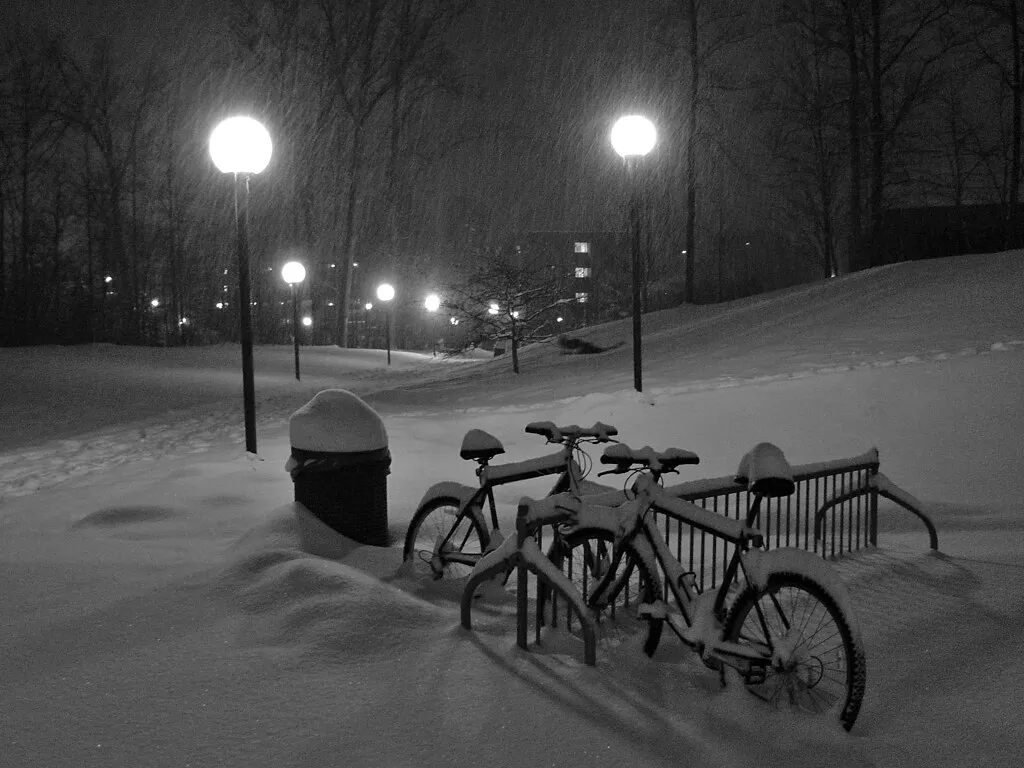
- Hands first. Lobster or bar mitts keep hands warm. Heated gloves can help on long rides.
- Layer for effort. You will warm up fast, so dress lighter than for walking but block the wind.
- Cover your face and ears under your helmet with a thin balaclava.
- Lights and reflectors front and rear, since days are short.
- Studded tires help on icy roads.
- Brake gently and avoid sudden turns on slick surfaces.
Driving
- Warm up wisely. Most modern cars do not need long idling. Clear all snow and ice first, including the roof and lights.
- Keep the tank at least half full.
- Carry a winter kit. See the winter car emergency kit.
- Slow down and leave extra following distance.
- Never warm up a car in a closed garage, since carbon monoxide builds up quickly.
- Dress for the outside, not just the heated car, in case you break down.
Arriving at work
- Keep a spare pair of socks and indoor shoes at your desk.
- Hang wet layers to dry.
- Wipe salt off boots to protect them.
- Charge heated gear batteries during the day so they are ready for the trip home.
Kids walking to school or the bus
Dress kids in layers with a hat, mittens, and warm boots. Talk about ice safety and staying visible. Have them wait in a safe spot out of the wind.
Plan for extreme days
On days with dangerous windchill, check whether you can work from home or adjust your schedule. Follow local advisories. Limit time outside, cover all skin, and watch for signs of frostbite. See frostbite and hypothermia warning signs.
Make it routine
Pack your bag and lay out layers the night before. Check the forecast each morning, including windchill. And keep a few hand warmers in your bag for days when the weather turns colder than expected.
For layering details, see how to layer for cold weather. For traction, see ice cleats and traction.